

The system of record for clinical trial finance
Auxilius turns your siloed data and fragmented documents into a structured, auditable clinical finance subledger: the deterministic data foundation that powers every workflow, feeds your data lake, and grounds every AI answer in a number you can trace.
Your ERP knows six numbers.
Your trials generate millions.
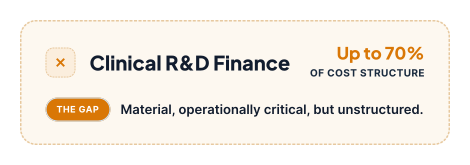
Clinical R&D is your largest and most variable cost — and the one your ERP is least equipped to give you insight into.
.svg)
- Can't access clinical systems and data sourcesTrial activity data needed to calculate your hardest-to-track clinical costs sits in systems and documents (e.g. EDC, CTAs, Payments reports) the ERP can't reach.

- Can't speak clinical trialsEven if you could get clinical data into your ERP, it doesn't know what a CTA, protocol, or patient visit is — let alone how they're used to calculate an accrual position.
- Doesn't provide sufficient detailWithout a way to structure detailed data at the vendor, site, and patient level, ERPs and other industry-agnostic tools are not able to provide the required level of granulatiry to manage clinical trial spend.

Auxilius is the subledger for your clinical trial spend.
Auxilius is the deterministic, auditable layer that sits between your source documents and everything you do with them — ingesting the data trapped across your trials, harmonizing it into a single structured model, and activating it across every workflow, report, and AI query that depends on it. And because every trial's actuals flow back into the foundation, the data from your last study actively informs the next.
From fragmented documents to structured subledger data.
Auxilius takes the raw material of every trial — contracts, protocols, EDC, payments, invoices — and turns it into one governed data foundation, ready to work wherever your team needs it.
.avif)
Your trial's financial record — captured in one place, automatically.
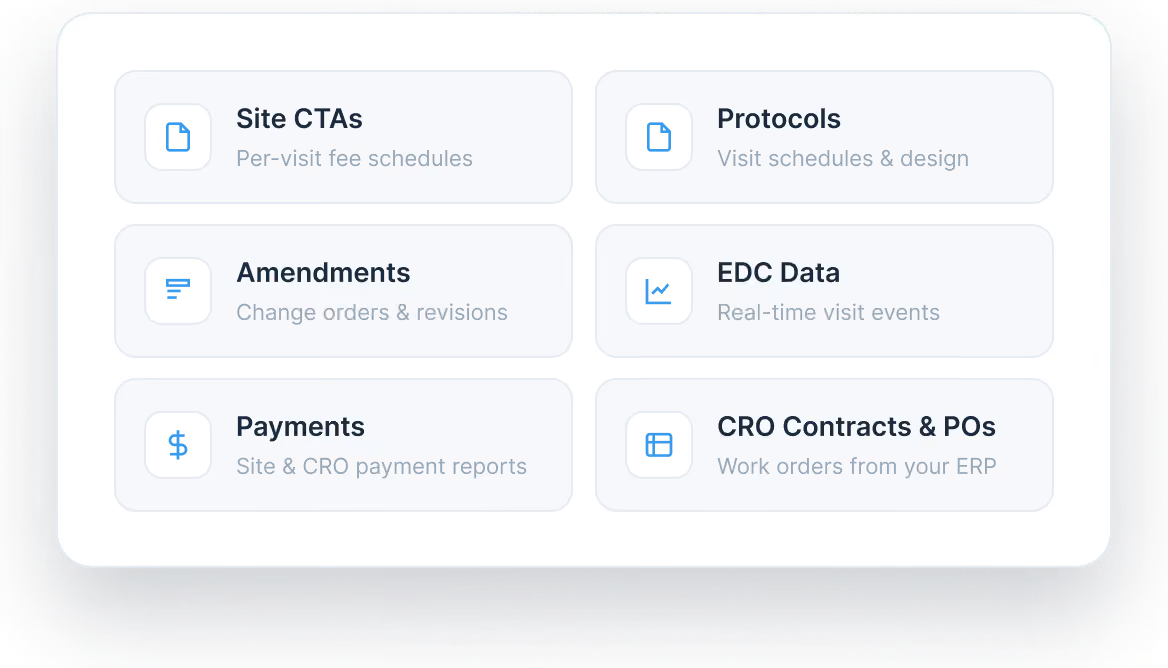
Auxilius ingests the documents and data that describe your trials, wherever they live across current and historic studies: site contracts, protocols and amendments, EDC feeds, CRO contracts, payment reports, and invoices from your ERP. No homegrown trackers, no manual re-keying, no waiting on ClinOps for a data pull.
Your data, mapped and reconciled across every system.
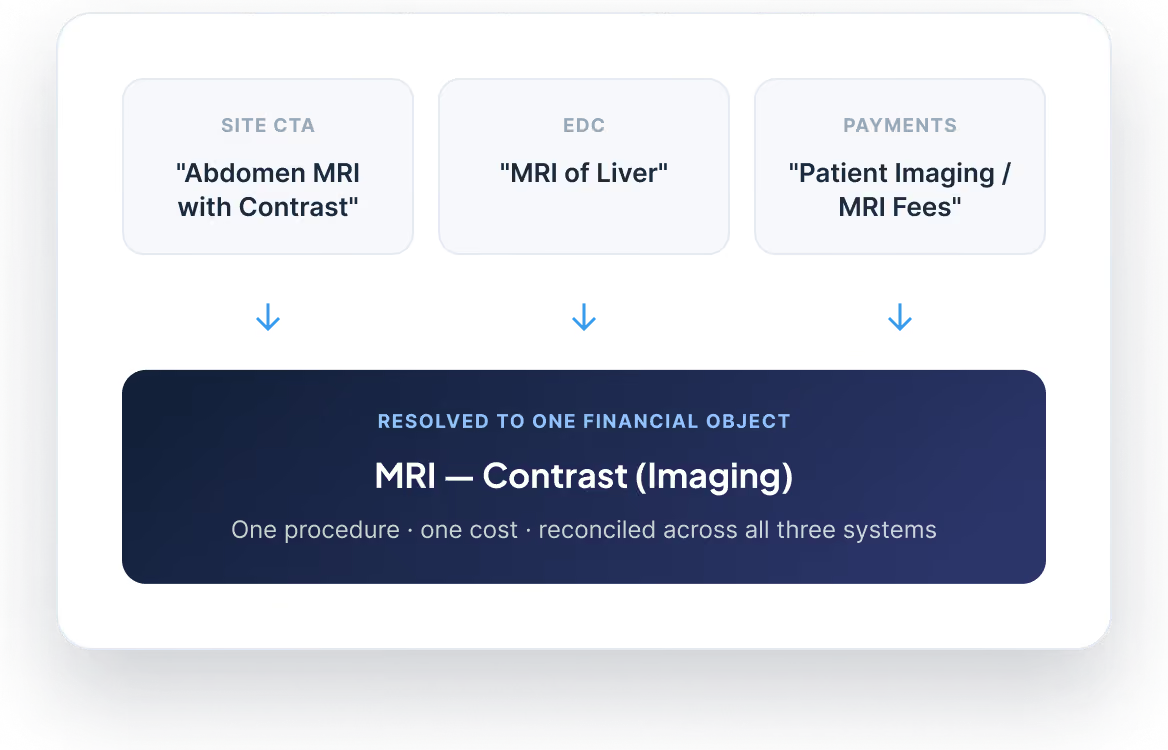
The same procedure shows up three different ways across three different systems. Multiply that by every vendor, site, and amendment on every trial, and reconciling it by hand becomes impossible. Auxilius maps and reconciles all your disparate data — deterministically and auditably — on a proprietary clinical finance foundation built over years of trial data.
The power of your data, in context.
Once your clinical finance data is structured, it stops being something you have to maintain and starts working for you — across budgeting, planning, close, and vendor & site management, with insight at every step.

LTD investigator spend calculations
Calculate LTD investigator expenses directly using EDC visit data and CTA terms — traceable to a transaction, not a CRO summary.

Historical benchmarking
Every closed study becomes a benchmark. Plan your next study from what your trials actually cost, by indication, phase, or geography.

Scenario modeling & variance analysis
Model what-if scenarios in minutes and spot what's driving a variance the moment it emerges — grounded in live clinical drivers.

Side-by-side expense source comparison
Compare vendor reporting to EDC-derived actuals so your team can exercise judgment and hold vendors accountable.

Change order & amendment management
Upload a change order or protocol amendment and analyze impacts on your budget before updating your model.

Audit-ready traceability
Every figure traces to a source document, with an exportable audit package and full change history behind it.
Your largest cost center, finally a structured data asset.
You've invested heavily in turning your enterprise data into a structured, governed asset. But your single largest cost center, clinical R&D finance, is the one domain still living in disconnected files and manual exports. Auxilius makes it a first-class layer of your enterprise data estate: structured, governed, and AI-ready, sitting alongside the rest of your data rather than siloed off from it.
.avif)
.svg)
A foundation built by experts — decision by decision.
Our clinical finance ontology and trial-level taxonomies weren't generated by a model or bought off a shelf. They were built by domain experts encoding tens of thousands of judgment calls about how clinical trial finance actually works. This accumulated expertise is what makes your data useful and trustworthy the moment you use it.
.avif)
Give clinical finance its system of record.