

Deterministic on the numbers.
Intelligent on everything else
Auxilius puts AI to work across clinical trial finance — surfacing the variance that matters, mapping data that used to take hours, and answering questions your dashboard was never built for. It works because it sits on an auditable system of record: every accrual, entry, and cost produced deterministically — rules-based, source-linked, and reproducible. AI drafts and flags; you decide.
Why generic AI can't close your books.
Connecting ChatGPT or Claude to your trial documents is easy — and genuinely useful for research, drafting, and ad hoc analysis. But that's pointing a model at files, not structured financial data it can trust. Ask it for an accrual, a variance explanation, or a forecast, and it hits three walls:

It doesn't understand your trial
Every number depends on protocols, enrollment, site activity, vendor contracts, change orders, and accounting methodology. A model reading a flat file sees text, not how your study operates.

It has nothing to ground it
With no structured source of truth, a model fills gaps and drifts — producing a confident, specific answer it has no way to verify. In a regulated close, "mostly right" isn't right.
.svg)
It isn't repeatable
A model can explain its reasoning, but ask it the same question twice and you can get two different answers. Your accruals need the opposite: the same inputs producing the same number every time.

The fix isn't a better prompt.
It's a foundation.
Auxilius AI doesn't reason over your raw files; it reasons over your structured clinical finance subledger. It doesn't estimate what happened. It reads it, linking every figure back to the contract, visit, or invoice behind it. That's the difference between an answer you double-check and one you can trace, defend, and take to your auditor.
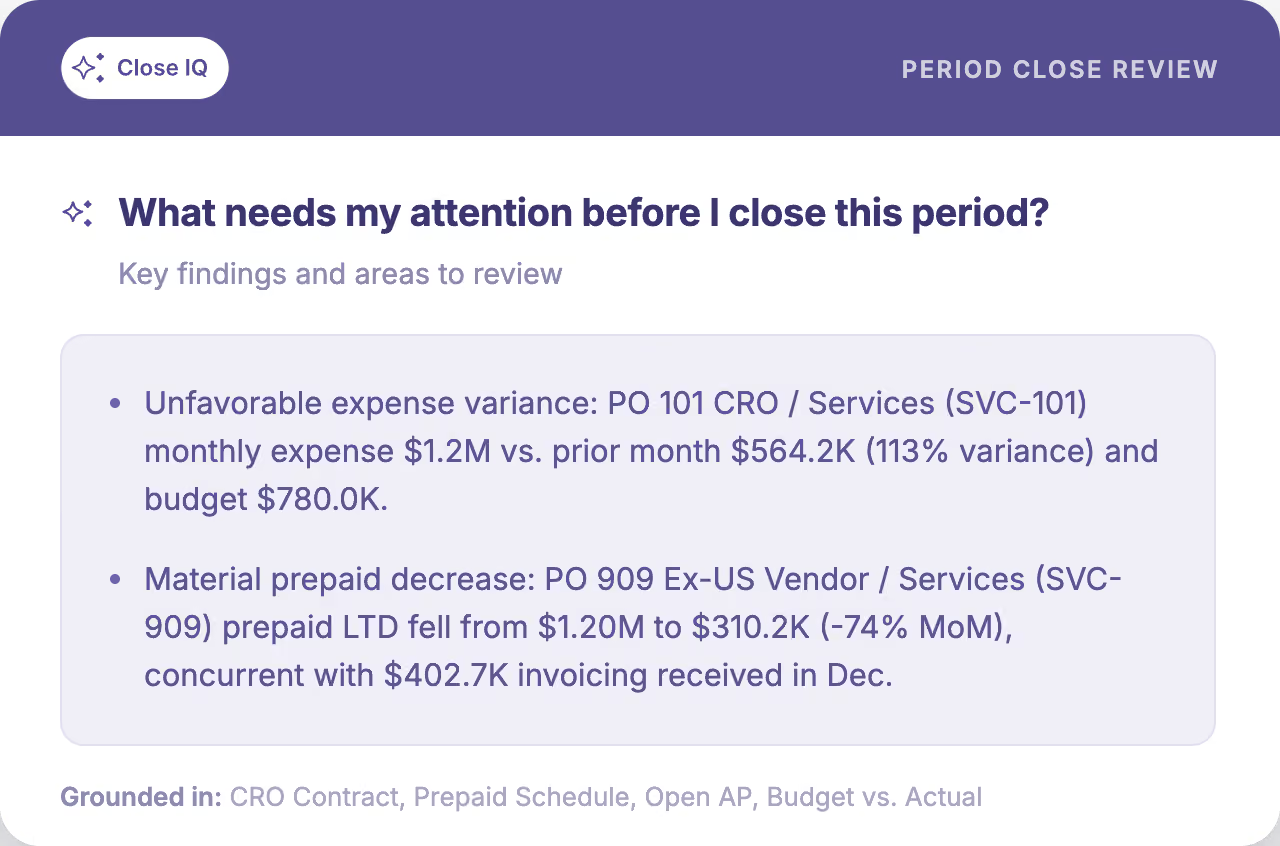
Where we're putting AI to work.
Selectively deployed, rigorously grounded. Each capability runs on your structured subledger and saves time or raises quality, without taking control out of your hands.
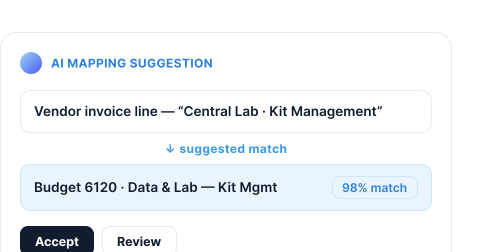
The mapping work that took hours, in minutes.
Auxilius proposes the connections; your team approves them. Every suggestion is grounded in your subledger and reviewed before it's accepted.
- Mapping & matching recommendations to accelerate the close
- Auto-map change orders & vendor estimates to your budget
- Auto-set forecast methodology for contracted CRO services
- Auto-map EDC data to your CTAs, storing the logic each refresh
Manage by exception, not by scrolling.
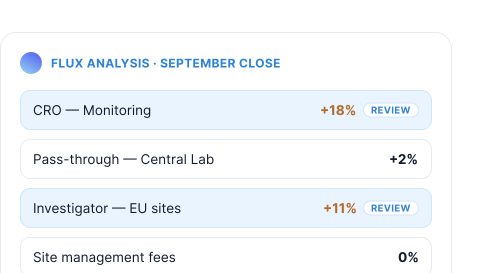
Flux analysis reads your close and points you to what actually moved — so your team spends its time on the material issues, not every row.
- Variance analysis surfaced right in the close
- Budget-risk detection across vendors and categories
- Forecast logic that flags where estimates need review
- Flux review & summary, generated at close
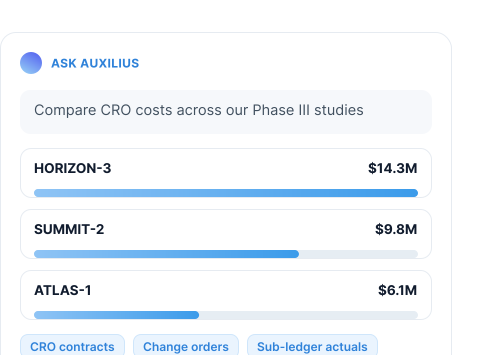
Ask the question your dashboard can't answer.
Ask in plain language and get a structured, source-linked answer — pulled straight from your harmonized sub-ledger, not guessed from a flat export.
- Natural-language financial queries across your portfolio
- Variance narratives & anomaly detection
- On-demand BvA, enrollment & cost reports from a prompt
- Every answer linked back to its source
Plan from data, not spreadsheets.
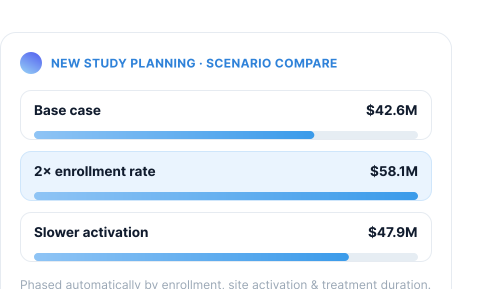
New Study Planning builds planned costs from proprietary benchmark data and your assumptions - then phases them automatically across the trial.
- Model planned study costs from proprietary industry data
- Auto-phase by enrollment, site activation & treatment duration
- Month-level cash-flow projections
- Clone plans and compare scenarios side by side
Our stance, in three commitments.
The industry is racing to bolt AI onto everything. We've taken a more deliberate path — because in clinical trial finance, a confident wrong answer is worse than no answer at all.

We start with your problem, not the technology.
We start from a deep understanding of how your team works: the close, the forecast, the reconciliations, and exactly where they hurt. The problem leads and the technology follows.

The data foundation is non-negotiable.
Anyone can call a frontier model or stand up an agent — that's not the hard part. The hard part is the connected, harmonized clinical-finance data underneath it. That's what we spent years building. And we aren't done.
%201.svg)
You stay in control.
AI drafts, maps, flags, and explains. It never books a number, closes a step, or signs off on your behalf. You keep full visibility, and you have the final word on everything.
Innovation your auditor is comfortable with.
We built the guardrails into the architecture, so you can move fast on AI without sacrificing auditability, control, or data security.
.svg)
AI never owns your numbers
Accruals, journal entries, and system-of-record accounting are deterministic and rules-based. AI can inform a decision; it structurally cannot generate, alter, or bypass a financial calculation.

A human makes every call
AI proposes, then your team reviews and approves. Data ingested with AI's help passes a two-layer QA review (including an Auxilius business analyst) before it's ever accepted. You're the final sign-off on everything.
.svg)
Every output is traceable
AI-generated suggestions are clearly labeled and separated from system-calculated data, and every action lands in a timestamped, user-attributed audit log — so you can always see what was AI, and why.

Private and enterprise-grade
We run Anthropic models inside our own AWS environment, single-tenant by design. Your data is never used to train a model. Encryption at rest, least-privilege access, SOC 1 & SOC 2 Type 2.
See AI that you can put to work for your clinical finance