

Spend less time maintaining your forecast and more time acting on it.
Allocate capital and forecast with confidence, backed by study insights and a forecast that automatically updates as trials progress and trials shift.
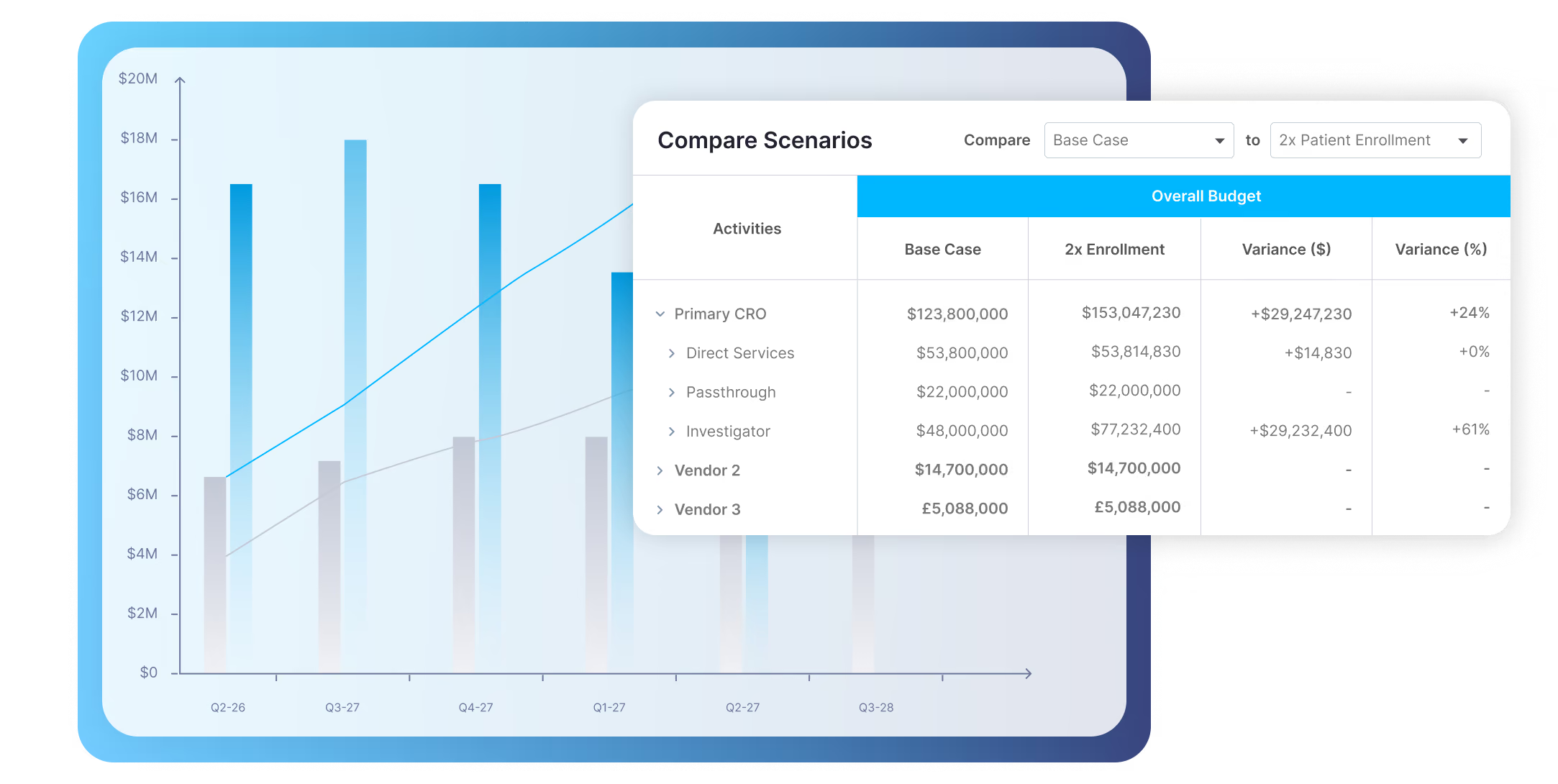
Insights into initial study planning and every forecast cycle after

Better visibility into cash needs – with fewer surprises
Always have a clear picture of cash needs across your R&D programs - with early awareness of potential deviations so you're never caught off guard.

Granular detail, clearer insights
Forecast with detail down to the vendor, activity, or line-item level. That way, you can explain any variance and not just report it.

Streamlined cross-functional collaboration
Free up clinical operations by giving finance their own view into the trial data, so finance can answer their own questions and loop clinical ops in only when it counts.
Built for the complexity of clinical trial forecasting
Powerful forecasting capabilities, built around how clinical trials actually work.

Fully configurable forecasts
Quickly set forecasts at a high level or drill into vendor and activity-level detail – with your forecast recalibrating each time actuals are booked.

Dynamic clinical drivers
Build your forecast around enrollment curves, site activation, and timeline milestones.

Change order analysis
Upload and analyze the impact of change orders on your budget before finalizing.

Scenario modeling
Model and compare the impact of enrollment changes or shifts to timeline on your budget.

Investigator grant forecasting
Forecast investigator costs using your own contracted costs, protocols, and trial progress.

Variance analysis
Flag budget vs. actuals variance and see exactly what's driving it, down to the vendor or line item.


Frequently Asked Questions
Every activity can be forecasted using the forecast approach your team prefers. Auxilius captures your trial specific timeline, patient enrollment curves, site activation curves, and even offers custom cost curves to ensure you’re matching the right driver to when the cost is likely to occur in the clinical trial. You can set forecasts at a high level or drill into vendor and activity-level detail, and the forecast automatically recalibrates each time a change order comes in and every month actuals are booked. That's the same level of control you'd have when building an Excel model, minus the manual updates and rebuilds every time something changes.
The Auxilius investigator forecast is powered by your study-specific clinical data model; forecast investigator spend in real-time patient by patient, using your site contracts, protocol schedule, and Electronic Data Capture (EDC) data. Costs for already-enrolled patients are projected off their remaining visits using the site-specific costs; future patients can be modeled with average patient costs by regional averages, study-level averages and by cohort. The Auxilius investigator forecast automatically updates to reflect early terminations, conditional procedures, and site costs.
Auxilius doesn't replace your planning tool. It complements it. Industry-agnostic planning systems operate at the corporate level and aren't built to manage the complexity and variability of clinical trial spend: things like enrollment curves, site activation curves, and change orders. Auxilius handles that clinical-level forecasting and exports the result into your planning tool by vendor, study, or at the program level, so your corporate process stays intact.
Your Auxilius forecast is built to support any level of granularity, down to the CRO cost activity, site, and patient level. You can compare budget vs actuals for any line item, so if something spikes, you can see exactly what's behind it.
With the Auxilius scenario builder tool, you can model and compare what-if scenarios separately from your contracted budget and forecast to see how changes to your trial could impact your overall study spend. Auxilius’s intelligent scenario modeling predicts impacts of change using predictive relationships between CRO and site activities, and changes to the study. Scenarios like shifting trial timelines and increased patient enrollment can be easily modeled, updated and exported; giving you an independent view to compare to the first change order draft from your CRO. Scenarios are stored in the scenario library; you can maintain multiple scenarios without touching your budget + forecast.
The Auxilius change order tool automatically analyzes the impactof change orders on your budget, and incorporates these changes once finalized. Out-of-scope costs can also be added to the budget and forecasted while changeorders are pending. Change order projections calculated in Auxilius’ scenariomodeling tool can be layered into your core budget.
Discover a new approach to clinical trial financial management

